"All the world's a stage, and all the men and women merely players."  --William Shakespeare

Wednesday
May082013

First Chapter: The Mending Wall by Jennifer Genest


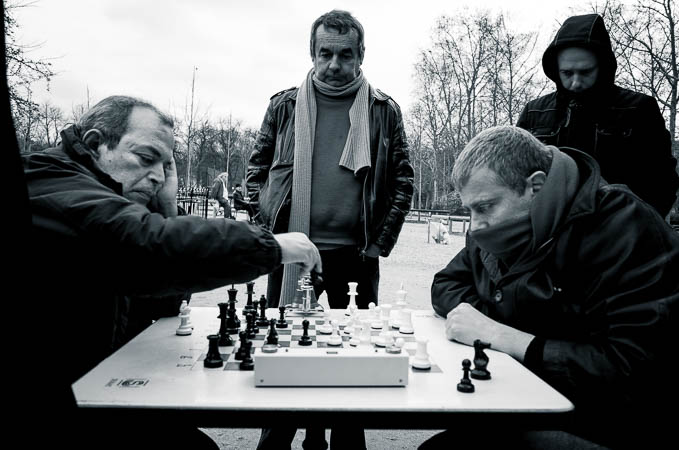
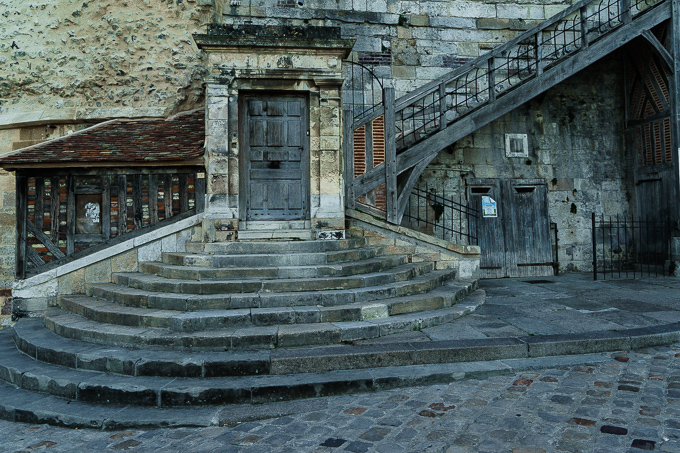
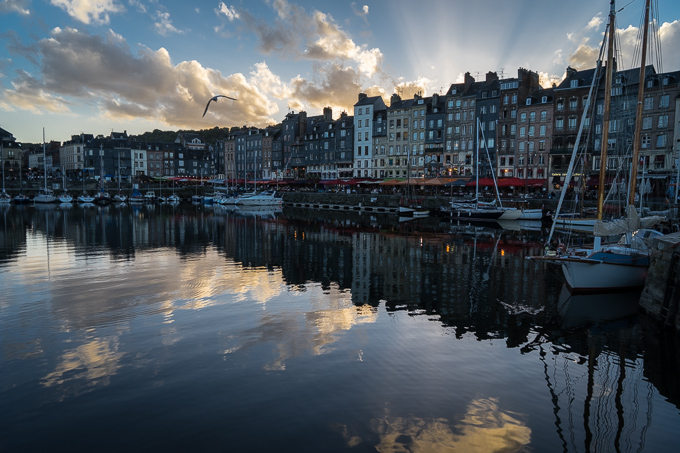
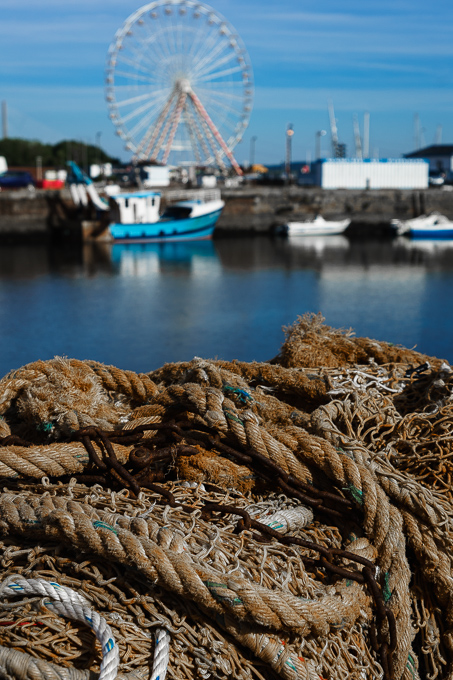
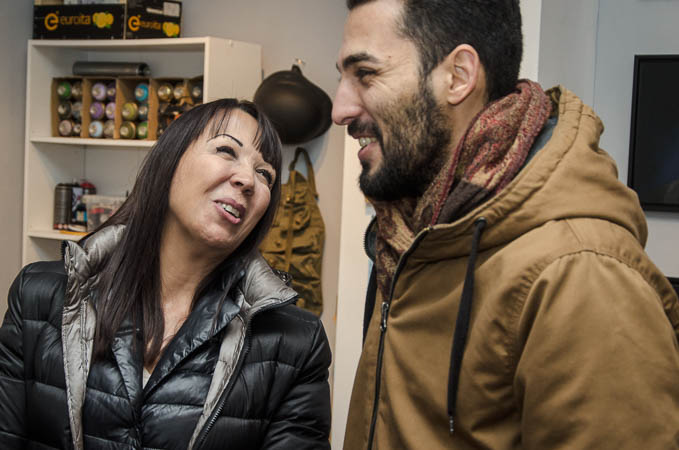
Photo (c) 2013 Richard Beban 

We are delighted to present the second installment of an occasional Paris Play feature, the first chapter of an as-yet-unpublished novel, by a writer we treasure and want to showcase.

We also ask each writer to provide us with a short craft talk on how the novel came about, and they will be available, in the comments section, to answer your questions about the process. Just leave a comment and we will relay their reply.

There are thousands of online sites, and small magazines, that offer short stories and poetry, but as a novelist, I wanted some way to spotlight writers who are working in that longer form, and to whet readers' appetites for the rest of the book.

The writers have not submitted, we have asked. It's not a slush pile, it's the tip of a diamond-fine iceberg. However, you can recommend a writer's work to us.

Which leads directly to the first chapter we're presenting this week, from Jennifer Genest's recently completed novel, The Mending Wall.


The Mending Wall (c) 2013 by Jennifer Genest


                    “…I have come after them and made repair

                    Where they have left not one stone on a stone…”

                                             --Robert Frost, “Mending Wall


Chapter 1: John

It was March in Maine when John Young became a local hero. There had been an unseasonable thaw, and then a subsequent cold snap and flurries, which gave ponds slushy, tricky patches you had to avoid.

     John had been doing an “emergency” Sunday job at the Wedding Cake House, out in Kennebunkport. The owner’s nephew had accidentally backed into the 100-year-old wall while plowing the driveway, smashing it into a jumbled pile of rock. He tried to restack it out in the snow, quickly realized he was in over his head, and called Leo, the handyman whose number he found stuck to the refrigerator.

     “You should have seen him, man,” Leo had told John, “Trying to fix the wall before his auntie came back from Florida. He was out there freezing his balls off. I told him, ‘No offense, man, but you restacking this wall is like asking a monkey to repaint the Mona Lisa.’ I gave him your card. ‘This guy is an artist,’ I said.  ‘The only master craftsman waller in Maine.’”

     When John arrived, the nephew greeted him with an upward nod. “You the stone guy?” he asked. Then, “How quick can you fix this?”

     “Few hours,” John said.

     “Cutting it close,” the nephew said. “My aunt is supposed to be back this afternoon. Look, it’s kind of a piece of shit…can’t we do it quick?”

     “I’ll do my best,” John said.

     The nephew stood by while John got started, separating the top course of stones from the bottom. Normally John would be on edge to have someone watch him, but he knew that kid wouldn’t hang out for long in the cold.

     “The handyman guy said you were a pro,” the nephew said. “Is that why your hourly rate is so high?”

     “I’ve been doing it for a while. And it’s a Sunday. I don’t usually work on Sundays.”

     The nephew looked at John’s old dump truck, the Moody Blue, and the attached trailer with the tractor. He walked around it, his hands shoved deep into his tan corduroy pockets. “This thing an antique?” he asked, pointing his chin at the truck. His brown Saab—shaped like a baked potato—was parked in the far corner of the driveway. It had a UCONN sticker in the back window.

     “It’s over 20 years old,” said John. “So technically, yes.”

     “Passes inspection and all, huh?”

     John silently located the base stones in the pile, laying them close together, with their broadest side against the packed, frozen ground. He assessed the size of the long, heavy thrufters and decided to unload the tractor. The nephew watched closely.

     John began placing the first course over the base, using the tractor to lift and guide the thrufters into place, where they’d run through the width of the wall, stabilizing it. As he’d predicted, the nephew soon went inside.

     The rest of the wall sagged from years of neglect and frost heaves. John studied it while he worked steadily on the wrecked portion, which he knew looked a little too clean and tight to pass for untouched. 

     Sometimes, he had to do what the customer wanted. This often meant ignoring his overwhelming sense to restore a wall, and to instead simply repair—“preserve”—it back to its disheveled state. But he’d been driving by this wall for years; he’d envisioned its potential, and he felt honored to work on it. He was in a mood today—he had to listen to the stones, had to make it absolutely flawless—even if it was just a section, and even if that meant restacking it later.

     When he finished, he put his chisel, sledge and shovels back into the Moody Blue, and the nephew came out.

     “Man,” the nephew said, looking at the wall. “It looks too good. She’s going to know we messed with it. Isn’t there any way you can loosen it up?” He grasped a stone on the top course and rocked the weight of his skinny, frat-boy body against it. It wouldn’t budge. “You shouldn’t’ve changed it…” he said. “It’s historic. Why did you change it?”

     “I didn’t change it,” John said. “I restored it. This section is how it originally looked a hundred years ago—maybe even better.” He jumped on top of the wall, his breath freezing in a huff. He rocked from side to side, to prove that nothing moved, nothing wobbled. The nephew still didn’t look impressed.

     “I see what you’re doing,” the nephew said. “Trying to make the rest of it look bad, so you can get some work ‘restoring’ all of it. This isn’t the time to be messing with…a piece of history.”

     “You know what?” John began. He took a deep breath. It wasn’t worth it. He’d get his check and leave. “If your aunt isn’t happy with it, call me up, blame it on me. I’ll fix it.”

     The nephew sighed. “Defeats the whole purpose, though, you coming out here today. She’ll still know I wrecked it.”

     “Well, maybe she’ll like it.” John was exhausted. “Anyone who knows anything about restoration will be happy with that.” He wanted to get home—he kept thinking about beef stew.

     “Whatever, man. You’re the expert.” There was a tone of condescension in the kid’s voice.

     The nephew was working John’s last nerve. “Look,” he said. “Try finding anyone else to stack stone in March. I don’t need your friggin' work, either, by the way. And—oh—next time you drive a snowplow, try not to fuck up history by backing into it.”

     The nephew raised an eyebrow, dismissed him by taking a checkbook from his jacket and clicking open his pen. “Who do I make the check out to?”

     “How about ‘Guy who saved my ass?’”

                                                             *  *  *

     It was starting to get dark when John got home. He put his tools back in the barn. The house lights were off; Allison must still be at her friend Carrie’s house. Since turning thirteen, she never seemed to be home. As he clicked the big padlock shut on the barn door, the street light on the corner flicked on—it was when kids knew it was time to come home. He was walking toward the house when he heard the panicked shouts from behind the barn.


     That morning, Allison had asked him if he thought the pond was still okay for skating, and he’d told her to wait for another full week of freezing weather, to play it safe. Weeks ago she and Carrie were working on spins, and they brought John to the pond to show him their Waltz jumps. Allison’s jump was cautious but the landing beautiful, her thin legs steady in rainbow legwarmers, her rosy face grinning with pride. Carrie’s jump was impressively high but she landed on the toe pick, nearly falling, her blonde hair whipping forward before she regained her balance. They were eager to get back onto the ice today and make their jumps perfect.

     “But we stay where it’s shallow,” Allison told him that morning. “I’m sure it’s frozen solid. It has been all winter.”

     “No,” he told her. “Just stay off it today. Let me check for sure this weekend.”


     John now rounded the corner of the barn, his body hot with adrenaline, his steel-toed boots squeaking the snow as he ran across the half acre toward the channel-fed pond at the edge of the woods.

     Allison’s red coat was what he saw first. She was flat on her stomach against the ice. “Reach for me!” she was shouting.

     In response, a heavy gasp. Splashing. The fingers of Carrie’s purple gloves were visible, fingers curled, trying to dig into the ice. The top half of her face and blonde hairline barely protruded from the hole in the ice; she held herself up the same way a swimming dog holds his nose above the water. 

     “Carrie, reach!” Allison screamed.

     “Allison!” he yelled.

     Water whipped from the ends of her two long, dark braids as she turned to look at him. A surge went through him when he saw her face—relief that she wasn’t in the water, horror that Carrie was, panic that Allison could be, at any moment. “Dad, Carrie fell through. She fell through! I can’t get her!”

     “Don’t you move, Allison…don’t you goddamn move an inch toward that hole!” His tone snapped her into focus, and she froze her body, nodding slightly.

     He jogged along the small pond’s shore, crazed with facts. It was getting dark; soon he would barely be able to see. Allison was a featherweight—90 pounds, maybe—and he was at least twice that. He couldn’t go onto the ice; he had to run back to call for help. But he couldn’t leave them. And the closest neighbor was a quarter mile down the road.

     A long-forgotten storage area of his brain engaged, spewing out information: A person could only stay conscious for 20 minutes in freezing water—less than that if they were thin or struggled. Some could survive for up to 90 minutes, if they stayed calm, brought their knees to their chest to keep their organs warm, and didn’t thrash.

     The trick was to stay calm.

     He removed his jacket. “Allison,” he said, forcing softness into his deep voice. She looked back at him helplessly, tearfully, her hands and feet splayed wide, like she’d stopped in mid-flutter while making a snow angel. He heaved the jacket toward her, and it landed at her feet. “Slow, slowly, turn and grab the jacket. Hold it by the sleeve, tight, and throw an end to Carrie.”

     With a shaking hand, she did as he said. The coat wouldn’t reach. Carrie had stopped splashing; her purple gloves were flat and still on the edge. Allison tried again, grasping the cuff of John’s black jacket and whipping the rest of the fabric toward Carrie. Carrie caught it and cried out.

     “Carrie,” John shouted. “Honey, gather up your strength and kick up, hard—try to get your chest and belly back up on the ice! Allie, pull—steady—on her!” He pictured Carrie’s white figure skates scrambling in the murky, freezing water, trying to find tread. He knew her legs must be numb.

     There was a wild chatter of teeth, then another splash as Carrie yanked the jacket without warning, pulling it from Allison’s grip and into the water with her.

     “Dad!”

     “Allie, quiet,” he commanded. “Okay,” he said. “Carrie, be still, honey,” he said. “Just hang tight, don’t you let go! You hear me? Allison, don’t you let her let go! I’m going to get rope!”

     He ran to the barn, undid the lock. How deep was the pond? Probably just over six feet—maybe seven—where they were. Why hadn’t he ever waded out to the middle of it in the summer, or sank a rope or a branch, to find out? It was stagnant water, full of duck shit, deerflies and mosquitoes, but still, why hadn’t he ever thought to find out how deep the fucking pond was?

     He searched the barn. Where the fuck was the rope he had bought to use for a clothes line, two summers ago, when the dryer broke? Jesus! Where? He grabbed his pen light from his tool chest, and looked for something—anything—rope-like to throw to them. Jumper cables? Too short. Finally, he spotted the dusty, shrink-wrapped coil of clothes line rope, peeking out from a box under the workbench. He took the padlock from the barn door. As he ran out, he flagged a passing car, waving the rope above his head.

     Call an ambulance. A girl has fallen through the ice back here. Hurry. Hurry!


     “I’m back!” John announced to the almost complete darkness. He shined the light on them. “Girls, I’m here, I’m here.”

     Allison had moved forward and was holding Carrie’s hands.

     How long had she been in the water now? Five minutes? Ten? When did she fall through?

     “Allie,” he said. “Why did you move?”

     “Dad. I think she’s dead! She let go of the ice.”

     “No,” he said, refusing to let this register. “Just keep talking to her. She’s lost consciousness.”

     “Oh my God, I killed her. Oh my God!”

     “Allie, stop it,” he said. There was a beat of silence. “Honey, she’s passed out is all. She’s going to be fine.” This last part was to convince himself, so he repeated it.

     He tore the shrink wrap from the clothesline with his teeth, unraveled it, and quickly attached the padlock with a square knot. “Allie,” he said. “Here, honey, I’m throwing the line to you, so when you feel the thud next to you, I want you to try to reach around, then wrap the rope around your ankle.”

     “I can’t let go of her.”

     “You can do this with one hand. You’re one strong chicken. I know you can do it.” She wouldn’t respond. “Allison.”

     She was shaking and crying, almost silently, seemingly paralyzed by fear. He called for her three more times, and she wouldn’t respond.

     He had no choice. He approached the pond and lay, stomach down, on the ice. He crawled low and quick, until he was an arm’s length from his daughter’s white skates; he could barely make out her ladybug-printed laces now, the cheery bugs like black dots. The ice groaned terrifyingly, and Allison screamed.

     He tied the rope onto her skate blades, then gripped her calf and squeezed.

     “Allison, you have to do this. You have to hold her—tight, tight, tight—I’m going to pull with the rope.” He patted her calf. “You hear me?”

     “Yes,” she said. She had returned from fear. “Yes. I can do it.”


     From the shore, John pulled steadily on the rope, holding the pen light in his mouth and casting a weak, crooked light toward the girls.  Miraculously, the ice held, and so did Allison’s grip. And then, like a difficult birthing, Carrie emerged, still and wet. Pulling the rope hand over hand, John blinked tearfully, spitting the flashlight into the snow as he slid the girls the last few feet onto the shoreline.

     Allison stood on her skates, letting out a gasp. She knelt over Carrie. John untied the rope from Allison’s skates.

     “Run, honey, you need to run home, call an ambulance, and run back here with blankets. Move!”

     She ran in her skates, the blades singing out against the snow.

     Carrie’s lips were blue, her eyes closed. The top of her head was still dry, but the rest of her fine hair was matted against her jacket hood and her face, the ends crisp with ice. He felt for a pulse.

     Later, when John looked back on this moment, he wouldn’t remember how he knew what to do, or how he remembered the CPR he’d learned in the Scouts 25 years earlier, or all the ice fishing lifesaving tips he’d apparently gleaned from a pamphlet or two.

     He unzipped her jacket and located her sternum—just over the head of a unicorn on her purple sweater. He laced his bare hands together and began CPR, the one-and-two-and-three-and-four-and-five-and…until he reached fifteen, and then delivered a breath to her frozen mouth. He continued, determined, knowing she would not die. Girls don’t die at twelve, he told himself, not here, not now, not on my watch. Finally, she coughed, and he turned her on her side as she vomited into the snow, breathing at last.

     “Carrie?”

     She looked at him. Her white-blue eyes were just as striking as they had always been, and he held her hand to his chest, patting it rapidly.

     “Oh Jesus, thank Christ…you’re okay, honey, just had an accident. We’ll get you home and call your Gramma. We have to get these icy clothes off you, so you don’t get hypothermia.”

     Allison returned as he was sitting Carrie up. “Carrie!”

     “She’s okay,” John said.

     Sirens sounded in the distance.

     “Oh Christ, good,” John said. “Allie, help me get her coat off.”

     Allie held her sitting up while John removed her soaked lavender coat, then pulled off her purple unicorn sweater, leaving her thermal undershirt. Her long icy hair lifted with the sweater, exposing the back of her neck—and a glimpse in the dark of what he thought was blood.

     “Allie! The flashlight. She’s bleeding.”

     “What? Where?”

     “Her neck.”

     She scooped the flashlight from the snow and shone it where her father indicated. He blinked, certain he hadn’t really seen what he saw: a purple-red birthmark shaped like a large, blurry smudge of a kiss. It curved slightly to the left, like the wind was blowing it.

     “Dad,” Allison said, sounding embarrassed. She quickly removed the light. “That’s her birth mark. She totally hates when people look at that. She won’t even wear a ponytail.”

     “Oh...” John turned to Carrie. “I barely saw it. It’s dark,” he said.

     “It’s okay, Mr. Young,” she said, weakly. “I don’t care.” She was shivering uncontrollably.

     Allison’s mother had had a birthmark in the same place, but hers was smaller and shaped like Texas. She called it her stork bite. She had died when Allison was a baby. Just now, John realized that he’d never told Allison about this important, unique feature of her own mother. His eyes watered.

     He wrapped Carrie in the two Afghan blankets that Allison had taken from the living room couch. Then he scooped her up, carrying her through the snow to the house, where the blue and red lights of a fire truck and an ambulance were approaching.   


Jennifer Genest, Photo (c) 2013 Lisa Searles

The Mending Wall: Craft Discussion. On Writing Chapter One


When I was writing the final draft(s) of this manuscript, I had the rare fortune of renting a private writing space for three months. I sat there each day for two hours and did nothing but imagine, drink tea, and outline the story on a huge paper matrix. I had no smart phone, no internet access, and nobody to talk to. It wasn't exactly writing, but more like entering an early stage of pregnancy when the cells form something that could one day be a heart and a brain (coincidentally, I was also pregnant with my daughter at the time).

After three months, when I felt confident in what the four main characters were capable of, what they wanted and what they needed, I began to write. I had a fairly solid skeletal outline and wrote on faith that it would develop flesh as I went. 

I had written previous drafts in first person, and from the single point of view of Allison, a teenage girl I identified with so strongly that I believe it hindered her voice and blocked perspective. This final version, told in third person, gives voice to Allison, but as one of four rotating character’s voices—a solution I felt comfortable with.

Chapter one needed to:

o   Establish John as an honest, working-class man

o   Show his heroism in a dramatic way (which will later be scrutinized)

o   Introduce an element of intimacy between John and Carrie (mouth to mouth)

I knew John would rescue Carrie from the icy water. I knew his daughter would imagine his mouth on her friend’s; I knew how messy and twisted that could potentially become in a teenage girl’s mind.

Aside from once being a teenage girl myself, three other things helped me bring John, Allison and Carrie to Chapter One:

o   When I was in grade school, a young boy drowned after falling through the frozen pond in the center of our rural town; he had been walking across the pond as a shortcut to get home from school. For weeks afterward in the news, there were warnings, information and tips on ice safety.

o   When I was a young teen, a friend of mine nearly lost her horse one night when it fell through the ice in a small pasture pond. A man walking home heard the mare struggling and thrashing. The story went that he ran into the dark snowy field, held her head above the water and screamed for help; soon help arrived to pull the horse to safety. Later, after the man was deemed a hero in the local paper, people began to say he was just a drunk walking home because he’d lost his license, that he just wanted attention, and that he was no hero.

o   The third thing that affected me deeply—and has so many others, to this day—was the murder of a twelve-year-old girl in my home town. I was eleven at the time; she and I had been classmates the year before. She was strangled by one of her neighbors, a quiet boy who had books about Satanism. No motive was ever established, and there were no signs of sexual assault. This act of violence shook our safe, unlocked town to its core. Rumors were born. On top of the grief, there was the lack of explanation, the anger and shock that it could be something as evil as this: the girl’s murderer killed simply for the thrill of feeling what it was like to kill someone. How could this be? 

How this manuscript came to be is a mix of those ingredients, the feelings and memories I had, the questions as I asked What if…?–and then challenging and changing the truths I knew. What if a good man turns out to be bad? What if you hide the painful truth from a child…will it, in fact, protect her from pain? What if a man of God is no more than a man of flesh? What if a child doubts who her father really is? What if a man loses his reputation—does he lose everything? And what if a troubled, evil boy in real life had been capable of love, if only here, in fiction? 

But I’m getting ahead of myself; most of these things come in later chapters. For now, you know that John is a hero; that’s enough.

 ~ JG


++++

About Jennifer:

Jennifer Genest grew up riding horses and playing in the woods of Sanford, a mill town in Maine where her family still owns a concrete company. In college she studied equestrian science before moving on to earn her BFA and MFA in creative writing. She is a Peter Taylor fellow for the 2013 Kenyon Review Writers Workshop.

In the past Jennifer has worked as a chambermaid in a beach motel, for a patriotic beer company in Boston, and as a copywriter. Her manuscript for The Mending Wall was completed in 2012.

She lives with her husband and daughter near Los Angeles.

++++
Saturday
May042013

Surrealist Café: Sensual Surprise


Painting, Pussy 2, (c) 2013 by Philippe Lardy


Last week we asked friends around the world to "Send us a paragraph or a poem or a photo or a drawing of absolutely anything sensual—food, love, beauty, dance—that you experience, observe, dream or imagine that takes you by surprise."

This week, from France, from Switzerland, from Vietnam, from Norway, from Washington, California, Arizona, Pennsylvania and Ohio, from around the world, your responses. Thank you for playing with Paris Play. (All texts and images (c) 2013 by the various artists.)


Cassandra Lane: Excerpt from her manuscript, Seed of Strange Fruit


Our obsession with food eventually moved to Jay’s kitchen. A trained chef and winemaker, he sautéed scallops in the finest of butters and wrapped their plump bodies in caramelized onions. Placing his creations strategically on stylish plates, he drizzled a creamy red wine balsamic sauce across the scallops and the saucers—a dazzle of color. “Let there be light,” he joked. We placed each scallop whole into our mouths, where spices awakened my taste buds and my flesh. 

Chilled glasses of white wine—always sweet, despite that Jay preferred red— refreshed our palates.

He drove me to wine country, fingered grapes while waxing poetically about their complexity, and introduced me to his winemaker friends, who offered me sip after sip of reds and whites. At a cottage restaurant, we shared a goat cheese soufflé and port-glazed figs, and I told Jay about my fascination with figs, rooted in the fig trees that grew in my childhood backyard. In its raw state, the purple-black skin is the sweetest part of the ripe fig. When you peel away the outer layer, you’re left with the milder, milk-white surface underneath. Not as sweet, but pliable and swollen, a lactating breast. One gentle nip releases its cool red ovaries, and here is where the fig’s sweetness returns, trailing the tongue.

I was drunk on our love. We were bound, Jay said, by a soul connection most people would go to their graves not knowing. We reeled each other in with our words—whispered words, written words. In emails and letters, Jay poured words into me that seemed as whole and fresh as the juice of a mango. I would read them out loud, holding the syllables in my mouth, believing them with my entire being. Somehow, I had forgotten that everything is skewed in the first stages of romance. Add to that an illicit love affair, and the sparks of distortion turn to flames. Reading astrological charts and Sabian symbols, I tried to confirm that this man was my soul mate, that we had not—could not have—destroyed our lives for naught.

At least, I could not have.


Nancy Zafris


I doubt you'll find a more sensual or appetizing food photo than this -- Ohio State Forest deep in France...


Photo (c) 2013 Nancy Zafris


Scott MacFarlane: Excerpt from novel-in-progress


Maybe my malaise went far deeper than this current contaminated mess.  Hell, I didn’t understand my own chronic alienation, except that now, without a doubt, the old model was badly cracked.  Even the morning wind through the firs sounded weary to my ears, and the late August sun burned dry from above the Cascade Range to the east––a deep red ball shining through a pallor of dark gray inversion.  The remains of Vancouver and Seattle still smoldered.  The murk settled over the Skagit Valley like an omnipresent reminder of collective doom.

“As fine she’s looked all year,” I heard Uncle Harley say in his smoker’s voice when he turned the Sheriff’s attention away from his barn and toward the river.

“Are you talking about Signe or the Skagit?” Bucky asked, with his eyes downhill.

“The river,” said Uncle Harley.

I continued unloading boxes while the two men in their 60s watched my mother on the sand bar step from her violet, silk kimono and into the cold, slow eddy in the small slough where it entered the outermost bend of the Skagit.  All but my mother’s white bun of hair submerged as she followed her daily, ritual meditation.  Hers was a cold water baptism that I had observed for decades whenever the river turned clear––summer, autumn, winter, or spring.  It was August, so she remained in the river for minutes instead of seconds.  I remembered how Derek and I, as naked lads, used to join her in the ritual.

“Do you think she minds us watching?” Bucky asked my uncle, shifting uneasily from foot-to-foot when Signe emerged from the river.  

Droplets glistened on her long naked body like morning dew.  She closed her eyes, slowly stretching and lifting her arms away from her side.  She faced the sun and seemed to bow.  I couldn’t tell if her expression was happy or sad, but she looked centered, almost serene, when a slight smile curled at the corners of her mouth.  

When her eyes opened, I wondered if she only pretended not to notice the men who watched her bend, then slip so smoothly into her kimono.  Thinking of my mom as still flirtatious bothered me more than her lithe and natural nakedness that had always been commonplace during our sporadic sunny days here in Fish Town.


Mary Duncan: Pillow Gifts

Photograph (c) 2013 Mary Duncan

On her wedding night, a virgin bride found a beautifully wrapped small gift on her pillow. She gently took off the gold ribbon and unfolded the soft, silk gold cloth. She laid the box on her lap and let it nestle in the soft folds of her white embroidered gown. 

Her groom, dressed in a luxurious blue robe, sat quietly on the side of the bed.
 
As he touched her hand, he said, “Please open it.”
 
Perhaps she expected a piece of jewelry or a small ornament for her hair.
 
She hesitated and then did as she was told.
 
A slight gasp, a blush. Inside the box was a small, ivory, two-inch hand-carved figure, showing a man and a woman entwined. The bride and groom had barely touched until this moment.
 
The gift of the netsuke (net-su-ke) or (net-ski) was the beginning of her sexual education and could have occurred in Japan in the 1600’s, long before The Joy of Sex was written. In China and Japan, gifts of erotic illustrations and netsukes, were how wealthy families educated young brides.
 
Not all netsukes are erotic. Animals, people and abstract objects are also highly prized. Japanese men used them to tie their sashes and used them as toggles on small sacks to carry their money and tobacco.
 
Eventually the netsukes fell out of favor because their sexual positions became too tangled, complex or controversial. When animals and multiple partners were introduced into the delicate erotic carvings, they were temporarily banned.   
 
Today these intricately carved, erotic netsukes are collected and shown in galleries and museums. They are made from ivory, bone, wood, amber and whale's tooth. In modern times, a combination of resin and ivory dust is also used. Be careful that your gift doesn’t encourage the killing of elephants for their ivory tusks.
 
Prices vary depending on the age, material used, the artist and origin of the netsuke. Before purchasing or investing, talk with an expert and do your homework. Newer ones are on the market and are far less valuable than those from the 1800’s and earlier.

Netsukes can be the perfect gift for a lover, male or female. Surprise the special person in your life with a gift on their pillow. Hopefully, you’ll both be pleased with the results.


Suki Edwards: Yang of Sensuality

Photograph (c) 2013 Suki Edwards


Gayle Brandeis: Flora


I've always liked the term
"lily-livered."  I know it means
cowardly, but this is how 
I see it:  the liver, sleek
and wine-colored, bursts forth
with lilies; petals drift
and ride the streams of blood.
Think of it:  the body
opens into flower, turns orchid-
spleened, jasmine-lunged, breath
tropical, humid with scent.
Poppies bloom between the legs,
wisteria vines wind
up the spine, each bone filled
with pollen and sweet nectar.  The heart
is a rose, of course, plushly
blossomed, and inside the skull,
with each new thought,
a tulip unfurls
in the brain.


Jane Kitchell: Red Bird Woman 

Sculpture and Photograph (c) 2013 Jane Kitchell


Eric Schafer: Excerpt from his short story "Married," from his collection The Wind Took It Away: Stories of Viet Nam


I have always loved Miền Tây, the Mekong Delta, one of the loveliest places on Earth. Blue rivers, sometimes mocha with rich silt brought all the way from Tibet; gold-green rice fields; high, clear skies that are almost green with the intense reflection of the rice fields at the start of the day and turn reddish cream at sunset; golden brown rice drying on the roads and green-pink thanh long fruit growing everywhere; hundreds of thousands of coconut trees; red-dusty roads, women wearing nón lá and plaid shirts, gracefully pedaling bicycles; schoolgirls in white áo dài with black trousers, little children running, laughing, shouting back and forth along the side of the road; the scent of fresh air and sweet fruit; the red clay earth running into the rough green grass...


Bayu Laprade

Image (c) 2013 Bayu Laprade


Ren Powell: Sensual Surprise (Dissonant Seduction)


We are taxiing on the runway now. I’m flying to Oslo to swear that I no longer want to be an American citizen.

For it to be real, I have to say it out loud. And someone has to hear.

There is nothing supernatural about oaths and prayers and curses. They are waves in the physical world. They move us, just as the sea moves the shore: imperceptibly and absolutely. Events as solid, as physical, as the moment of held breath before a kiss.

I swear.

*

There is a beauty in physical ease: dance, the smooth gesture of a master carpenter’s hand, the whispered words of a lover that ride the breath - measured carefully and given over. With ease.

*

Language is the core of identity. The physical world clings to itself. 

The juxtaposition of diphthongs and fricatives reveal everything. It is an unavoidable intimacy of push, of pulse.  

And I will never pass as Norwegian, regardless of my appearance or papers. The second generation Somalian, whose broad vowel æ resonates without an edge, proves that the visual is trumped by the sensual. Appearances deceive, but the breath can not.

*

There are so many vowels I cannot sing. Cannot measure.

And though these sounds I make are not beautiful in themselves, they gesture toward something - toward the kind of beauty that is evident in a dissonant chord: the charm of an accent.  A necessary contrast, a drama –

*

May the waves of my breath, and the surrounding silence, penetrate your chest cavity and finger the hollowness there. May I make you aware of the disruption of molecules – which is heat, after all.


Rachel Brown

Image (c) 2013 Rachel Brown


Daniel Abdal-Hayy Moore: Cobalt Blue


Cobalt blue! Whose
very name alone would
make me a believer, but whose
color in transparent glass
against light from a window

lifts the mind to a fantasy of
deep darkness, of
sea-depths, undersides of
sunken hulls, treasure,
deepsea tropical caverns,
night. But

night with a holy radiance,
cloisters, Mediterranean
monasteries, Greek
bottles on high walls overlooking
the brighter blue sea -- 

cobalt blue glass!


Shadowy translucence!


Sexual celestial!


During the day:
    night!


Nice Art One

Image (c) 2013 Nice Art


Diane Sherry Case


The first spot of sunlight after my sister's death fell on the peach tree outside my front door. I had not perceived life in color for months. And suddenly there was my favorite fruit, abundant, as many peaches as I could eat. My favorite hues of sunset and the texture of velvet. I sat on my porch and let the sticky juice run down my chin and mingle with tears of grief. I made primal sounds like a famished baby and devoured one luscious peach after another, amazed, simply amazed that life goes on, life goes on.


Nice Art Two

Image (c) 2013 Nice Art


Bruce Moody: With Elephants


With elephants everything
volumes 
down.

A cascade of cliff,
on four limber pillars.

A fog of stone
always slowly
moving west.

A strolling Niagara.

Wearing a wardrobe
of loose-fitting determination,
she looms 
her great sweet 
daunt.

You have felt their stone-tough, 
bristly,
sensitive
proboscis.

It snouts around like the foot of a snail. 
until it clamps the morsel of crackerjack,
which it, 
like an undersea thing, 
daintily,
and confidently
and insouciantly
and speedily
imparts 
into its heart-shaped maw.

Bad for the tusks?

Well, elephant dentists and nutritionists say
Elephants must eat 
for their health and satisfaction,
every day,
of popcorn,
a silo. 

So who am I to lecture an elephant – 
vegan as she is – 
about weight-loss?

Elephants remember
to diet on whole savannahs. 
And toss their mighty heads about,
making gales with their ears

and, with their Cyrano noses,
announce ––

Triumphals!


Nice Art Three

Image (c) 2013 Nice Art


Rachel Dacus


Nissa speaks in kisses.
A dog’s mouth isn’t made for English, 
so she sounds her vowels with swipes 
of tongue – that best pink instrument. 
She covers the face, the lips 
from which my voice emerges
and patiently investigates
the curves, tasting the salt 
of meaning behind my ear, 
pressing on the place
that looses my giggles,
which I am sure she knows
as her real name.


Nice Art Four

Image (c) 2013 Nice Art


Sunday
Apr282013

Sensual Surprise: An Invitation


My friend was late. We both grew up in the Sonoran Desert, and were trying a new Mexican restaurant. I didn’t like the looks of it—on a noisy street, noisy inside, the menu so-so. I called her to suggest we meet at another one several blocks away.

Oh! But she thought our dinner was for next Wednesday.

I had hardly been able to bear to break away from the writing earlier. But I was out in the world now, and hungry. My friend and I caught up on news as I walked towards Shakespeare and Company.

I picked up James Salter’s Burning the Days at the bookstore, and talked with Ben, whose literary taste is book for book the mirror of mine. I also bought Daily Rituals: How Artists Work by Mason Currey.

The second Mexican restaurant had white tablecloths. That usually means slightly too stuffy for my taste, and overpriced.

I opened Daily Rituals and read. The serving of guacamole in a Oaxacan pot was huge, but it was tasteless.


There were three people at the table in front of me, a beautiful woman with a high forehead and short hair, her husband whose back was to me, and their male friend. The friend was deconstructing the difference between pleasure and joy. The woman laughed abruptly, an odd laugh, a warm smile, and then the man kept lecturing on and on, and her smile disappeared. This was the Preacher’s table.

A table to the far right was filled with young French women drinking margaritas. More and more margaritas. Their volume rose and rose until they were shrieking with laughter. This was the Drink and Be Riotous table.

Directly to my right was a French couple in their late 30s. She was wearing a dress with cardigan, hair pulled back, reserved. A very thin, boyish man sat across from her. They ate and talked in low voices, discreetly. This was your Married Couple table.

I ate my enchiladas verdes. Is it possible that enchiladas can have too much cheese? These had too much cheese. Almost every writer whose work I love writes six days a week for two or three hours, first thing after breakfast. That works best for me, too.

At his table, the preacher was killing the other two with boredom.

I glanced to my right. The reserved married woman was sitting sideways on her husband’s lap. She'd removed her sweater, revealing a sleeveless, low-cut dress with big polka dots like flamenco dancers wear. Her arms were raised to her prim bun, and she slowly released the rubber band and shook out her hair. As she did so, she wiggled, wriggled—shimmied!—on her husband’s lap. He didn’t seem to mind a bit. This was the table of Sensual Surprise.

Aha! 

Okay, friends.  It’s time again for the Surrealist Café: Sensual Surprise. Send us a paragraph or a poem or a photo or a drawing of absolutely anything sensual—food, love, beauty, dance—that you experience, observe, dream, imagine that takes you by surprise.

Send it to us by noon, Paris time, on Thursday, May 2, and we’ll publish it Saturday, May 4. We've played this game before; this is the fourth worldwide Surrealist Café we’re creating.


Saturday
Apr202013

Marley: The Lion in Winter


Marley, our feline, family and friend: you're not feeling well. You’re eating a special food and taking daily medicine for a kidney ailment, but you’re still losing weight. It’s time to take you to Dr. M. for a check-up. 

You yowl in the elevator, then you’re calm, quiet, curious, as I pull you along Boulevard St. Germain in your cat caddy.

You growl at the alarming smells in the vet’s waiting room.

A door opens, a short yappy canine skids across the floor towards you. You hiss like a snake.

Dr. M. in slow-mo, as if walking in a dream,

John Lennon sculpted face and specs,

hands at home in fur, questions you.

I translate: your behavior is odd, changed.

You don’t jump up on the counter now,

sleep instead on your bed on the kitchen floor,

no longer come bounding out for our company,

you wander in beside one or the other of us for a while,

then return to the kitchen alone, as if disoriented.

You forget your cat box at least twice a week.


Dr. M. sinks his slow hands in your white belly fur,

feels around—how patient you are!—

then peers into your eyes with his light. This you barely endure.

We hold your head and paws while he presses a syringe into your front leg. 

You yell at him: you’ve had it!

One final indignity: claws clipped.

You are not amused; no, you are royally pissed.


Your eyes are fine, the doctor says, but it could be

a tumor of the brain or lungs.


The next day we have an appointment at a clinic

on the periphery of Paris, due north, a long Métro ride.


Richard places a turquoise towel around his neck,

and drapes you around his shoulders.


Won’t he jump down? I wonder. But no, you don’t.

Just in case, I wheel your caddy beside the two of you.


Photograph (c) 2013 Kaaren Kitchell

Your first Métro ride. Richard stands, with his Turkish Angora boa. You look around in amazement. You rotate your gaze in every direction, marble-eyed, down at the tracks, the tunnels, the cars, up at the ceiling, the ads, the humans, who eye you in amusement.  

Since we arrived in Paris, you haven’t been out at all except for up Blvd. St. Germain to the vet’s.

(I remember Grammy K., living in that high-rise care center in San Francisco, loving it when we sprung her and wandered the city streets.)

You stay close to Richard’s ears, lick them a little, your hind legs trailing down his back. I drape them around his shoulders again, but they prefer to trail.

A block from the clinic, you suddenly pant like a lunatic (a sixth sense as to where we’re going, or thirst?).


Photograph (c) 2013 Kaaren Kitchell
In the waiting room, Richard lays you down on a chair. You go limp, head and paws hanging over one side, tail drooping over the other.

I sign you in and bring you water.

Two young French girls ask your name.

Marley, Richard says.

Is your pet in there? I ask. They nod. What is his name?

Snoop.

Snoop Dog and Bob Marley, kindred spirits!

The vet comes out holding a tiny dog who looks like a fox with a tube coming out of his forehead. One of the girls reaches for him, cradles him on her lap. He sits there staring, forlorn.

Il est trés malade, says the other girl.

The girl who holds Snoop curls over him, sobbing.

We comfort her.

What kind of Frankenstein experiments are they doing in there? you wonder, still lying across the chair limp.


The doctor calls us in. He is young, handsome, warm.

You lie on the table, limp. The vet interviews us, examines you and carries you out of the room for the X-rays.


I go around the corner to find the bathroom. Returning, see the saddest dog I’ve ever seen, splayed on the floor, eyes wounded, his dewlaps spread like spilled water. 

He has neck cancer, the vet’s assistant says.

Will they put him to sleep?

She doesn’t know.


The vet carries you back into the room. It’s over!


You spring into action, explore every corner of the room, finally settle on a high counter near our heads.


The vet puts up the X-rays. Your heart: fine. So are your lungs and brain. But here, see the dark line along the colon? The lining appears to be inflamed. He’ll call our vet to discuss what to do. You need more blood work and an ultrasound.

We ask about the saddest dog. Oh, he’s on a course of chemo for three weeks, says the vet. He will look like that for another few days, and then he’ll be fine. Amazing!

All the way home, you’re alert and relaxed. Just a brief spell of white coat syndrome, just like Richard has.


Next day at Dr. M’s, a very young girl in a white lab coat with long dark hair tells us the doctor will be out shortly. She moves slowly, as if dreaming, comes over to you and coos.

Anouk is her name. She’s the veterinarian’s daughter, 11 years old, she wants to be a vet like her dad. 

More blood work means another needle. He’ll call us with the results later that day.


Drawing (c) 2013 Anouk McCarthy

The news is good. The renal condition is improving. He will give you medicine for the colon condition, and it’s not too difficult to treat. And you'll get your ultrasound the 24th.

Richard stops by the vet’s for the medicine. Anouk gives us her two drawings of you, looking like a little fox.

Marley with the plumed tail,

Marley the Prince (pronounced the way the French do, prance),

Marley with the Van Gogh eyebrows,

Marley with the turquoise eyes (now navy blue),

Marley, Mr. Floofypants, friend Dawna calls you,

Marley, little king of the block who adopted us

the day we planned our wedding,

Marley who wanted a home

with no other cats (or dogs or kids),

Marley with the white Elizabethan ruff,

Turkish Angora with buff-colored ears,

spirit neither shy nor neurotic,

fierce, sure of yourself,

certain of our affection,

rubbing white fur on us,

singing your feline song,

shedding your love

all over the house.


Drawing (c) 2013 Anouk McCarthy


Thursday
Apr112013

Men of the Marais

It’s still cold in Paris (the longest, darkest, coldest winter in 45 years, we heard) so I’m inside at Café les Philosophes, back to the window, computer open, editing a chapter. It’s not my usual haunt, but it's close to where my evening walk led me.

On the wall across the room: the golden labyrinth collage I love. Surrounding the labyrinth, cut-out newsprint, with words in red: “Je pense, je pense,” and “Je t’aime.”

I take a break for some fresh hot delicious vegetable soup.

A Peruvian-looking man with bronze skin and a humble air, passes in front of me bearing a tray of jasmine leis, tiny white flowers woven with miniature red roses.

He offers them to the single British man to my left.

No, says the man.

Non, say the laughing Japanese girls.

Non, say the French couple.

Non, the matronly Dutch women.

He passes between the labyrinth and a table of four men. The one whose face I can see (I’ll call him the lead man, since he’s ordered the wine and suggested dishes to the others) signals to the flower man that he’d like to see a lei.

He puts it under his nose and breathes deeply, passes it to the younger man across from him.

They pass the lei around, drinking in the scent.

The lead man pays for two leis. The man across from him drapes one around the forehead of the man to his right who looks like a young Jack Kerouac, handsome in a red plaid lumberjack shirt, turning him instantly into a fetching Bacchus.

The image is too delightful to lose. The lead man takes out his camera and snaps a photo.

The tenderness between the men, their aesthetic sensitivity, is wonderful to see.

Emotional closeness: it seems easier between women friends, easier between couples than in friendships between (so-called) straight men.

I look at the collage: je pense, je pense that men could learn so much about male-to-male friendship from these men in the Marais.

(And here's a related post, from 2011, on tenderness in boys, and the great mythical friendship of Castor and Pollux.)


Street art (c) 2013 by Kashink